
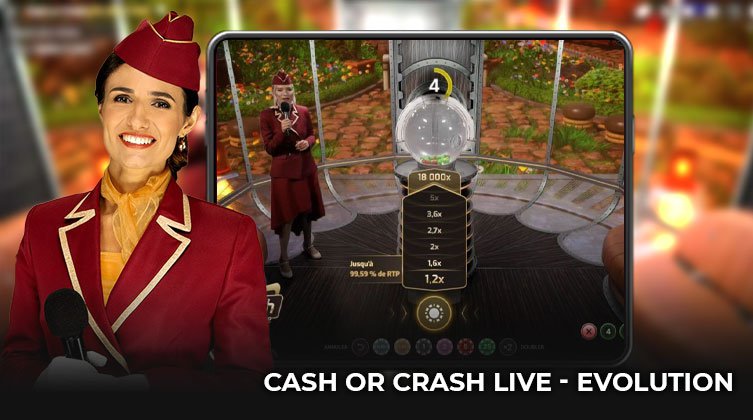
Exploring entertainment and digital trends as a journalist, I’ve watched a curious shift in how Canadians view risk and reward https://cashorcrash.ca/. We used to envision high-stakes drama on trading floors or at casino tables. Now, that same experience has an unexpected echo in the way people see legal proceedings. Courtrooms, with their built-in tension and clear-cut verdicts, connect with a similar part of our collective imagination. This brings us to a platform like Cash or Crash Live. It doesn’t engage in legal matters. Instead, it acts as a cultural mirror, reflecting a broad curiosity about moments of intense pressure. Outcomes in a real Canadian courtroom settle matters of justice, with profound and lasting impact. Cash or Crash Live harnesses the basic thrill of an «all-or-nothing» moment and delivers it into a controlled, entertaining format. We must keep this distinction sharp: the live legal system functions with solemn duty, not for amusement. Still, recognizing our shared fascination with pivotal moments helps explain why games that simulate edge-of-your-seat tension hold such appeal. They offer a version where everything can be won or lost in an instant, without real-world fallout.
Understanding the Canadian Legal Landscape
To understand where any similarities with games of chance fall apart, you must have a grasp on Canada’s data-api.marketindex.com.au legal basis. The system is a carefully built institution. It depends on the rule of law, legal guidance, and strict protocol. Its objective is to deliver justice, never entertainment. Provincial courts deal with everyday conflicts, while the Supreme Court of Canada handles constitutional issues. Every step adheres to statutes like the Criminal Code or provincial acts. The process is methodical and slow. Pleadings get submitted. Evidence is produced under strict regulations. Arguments must depend on law and fact. A trial isn’t a impromptu event; it’s the final phase of this detailed planning. The outcomes—guilty or not guilty, liable or not liable—alter lives for the people involved. Judges or juries reach these verdicts through careful reflection. They carry a heavy duty. The outcome is never determined by a spinning wheel or a crashing market. This principled, careful atmosphere couldn’t be more dissimilar from the rapid-fire, chance-based adrenaline of a live game show. The distinction highlights the critical gap between societal judgment for fairness and a personal choice for amusement.
Contrasting Virtual Risk with Real-World Consequences
The key distinction here is definitive. It revolves around the nature of the stakes. In Cash or Crash Live, the risk is strictly financial and discretionary. It’s confined to the entertainment budget a player opts to spend. The «crash» means giving up that wager. It bears no further legal, social, or personal consequences. The environment is crafted for excitement. A Canadian courtroom handles consequences of a distinct magnitude altogether. The stakes are fundamental rights: freedom, financial security, child custody, reputation. The procedures aren’t meant for entertainment. They serve for truth-seeking and the fair application of law. A trial’s outcome can affect the course of lives, families, and entire communities. Both arenas contain tension and unpredictable outcomes. But comparing them is a false equivalence. One is a leisure activity that mimics risk. The other is a pillar of democracy, managing real human conflict with deep and permanent effects.
Court Cases Are Not a Game
We must dismantle any notion that legal proceedings resemble games of chance. The Canadian justice system is built on equity, evidence, and reasoned argument. A verdict is not a random event. Ideally, it’s the logical conclusion drawn from applying the law to proven facts. Lawyers don’t «wager» on strategies blindly. They build cases from research, precedent, and testimony. Judges and juries are not passive spectators hoping for luck. They are diligent, duty-bound arbiters who must deliberate with care. The timeline extends over months and years, not seconds. Framing this as a «cash or crash» scenario misunderstands and belittles the pursuit of justice. The metaphor risks reducing complex human stories and legal principles to mere spectacle. The public might track a sensational trial with a game-like fascination. But the people inside the system are engaged in a deadly serious process. There is zero element of chance in its rulings.
Cash or Crash Live: A Test of Tactics and Guts
Cash or Crash Live is a hosted game show built on the psychology of uncertainty. A real host streams the gameplay in live time. The idea is simple and gripping. A multiplier, linked to a digital rocket, starts climbing from 1x. Participants place a stake before the round begins. As the factor rises, they face a single choice: collect to lock in their wager boosted by the existing figure, or hold on for greater returns. The hook is that the ship can «fail» at any unpredictable time. When it fails, the multiplier goes back to 1x. Whoever who didn’t cash out gives up their bet. No skill can foretell the crash. It’s a random event governed by a verified algorithm. All the tactics lies in the timing of the collecting move. This builds a real, communal pressure. Viewers see the factor climb, seeing which players tracxn.com secure their gains and which see likely profits evaporate. It’s a true, distilled experience of danger versus profit.
The Attraction of Intense Moments
What attracts people, Canadians included, to high-stakes situations? The psychology is clear. These scenarios activate a strong cocktail of adrenaline and dopamine, chemicals connected to alertness and reward. You see this attraction in thrilling films, competitive sports, and games that mimic risk. A courtroom verdict or a key piece of evidence shares a story shape with these moments. There’s a accumulation of tension, a critical instant of unveiling, and a clear conclusion. Platforms like Cash or Crash Live tap directly into this wiring. They compress the narrative into a rapid, graphic format. The core «cash or crash» mechanic presents a widespread human dilemma. Do you cash your winnings or risk them for more? It’s a streamlined, safe version of life’s greater gambles, like investing savings or waiting for a jury. For players, it builds a safe space to sense the thrill of deciding under pressure. The stakes are individual points or tokens, not someone’s liberty or livelihood.
The Function of Entertainment in Respecting Law
Even with the law’s solemnity, the public has always consumed legal drama with an component of entertainment. Recall courtroom sketches on the nightly news, the seemingly infinite stream of true-crime documentaries, or gripping legal thrillers. Canadians are captivated by narratives of justice. This point doesn’t diminish the system. It emphasizes a human urge to understand conflict and resolution. Platforms hosting interactive entertainment, like live game shows, operate in a separate sphere. Yet they satisfy a similar need for engaging narrative tension in real time. They provide a structured, predictable form of excitement. The rules are clear and the outcomes are direct, bounded by financial limits. This lets people experience feelings of risk and anticipation in a safe, consensual, recreational context. It’s a form of play. It’s essentially different from the often grim and always serious business of law. Still, it caters to a similar cognitive hunger for resolved tension and clear outcomes.
Safe Engagement with Hazard-Based Entertainment
For Canadian players who love the rush of hazard-based entertainment like live dealer games, responsible engagement isn’t just a recommendation—it’s essential. Rule one is to treat the activity as paid entertainment. It is not a means of income or a solution for financial problems. Set a firm budget, an amount you can manage to lose entirely, and hold to it without excuses. Set time boundaries for your playing times. Avoid playing when you’re emotionally distressed. Choose to reputable, licensed platforms overseen by provincial authorities in Canada. These ensure crucial protections like certified random number generators, along with features for setting deposit limits or self-exclusion. Your attitude should reflect a leisure activity. The cost of playing should feel like purchasing a ticket to a movie or a ball game. The instant it stops feeling like fun, the time it becomes like a habit or a financial necessity, it’s time to stop. Every Canadian territory offers responsible gambling support. Use them.
Summary: Distinct Spheres, Shared Human Fascination
The figurative line between a «courthouse break» and a game like Cash or Crash Live is bright and should not be obscured. Canada’s legal system is a complex, essential institution for rule and law. Its results are considered, not randomly determined. Cash or Crash Live is interactive entertainment. It packages the universal excitement of risk and reward into a fast-paced, digital format. What they possess isn’t mechanics or result. It’s a ingrained human obsession with critical moments, with tension and its unwinding. One satisfies our societal need for order and fairness. The other attends to a personal hunger for excitement within a safe, recreational context. Acknowledging this distinction lets us value both the seriousness of the law and the crafted fun of a game. Observing culture, I see them as two separate mirrors of how we, as a society and as individuals, navigate the ever-present concepts of chance and decision.